Login

With petrol prices soaring, is now the time to go electric?

Author: Danny Thai   |   15 Mar 2026


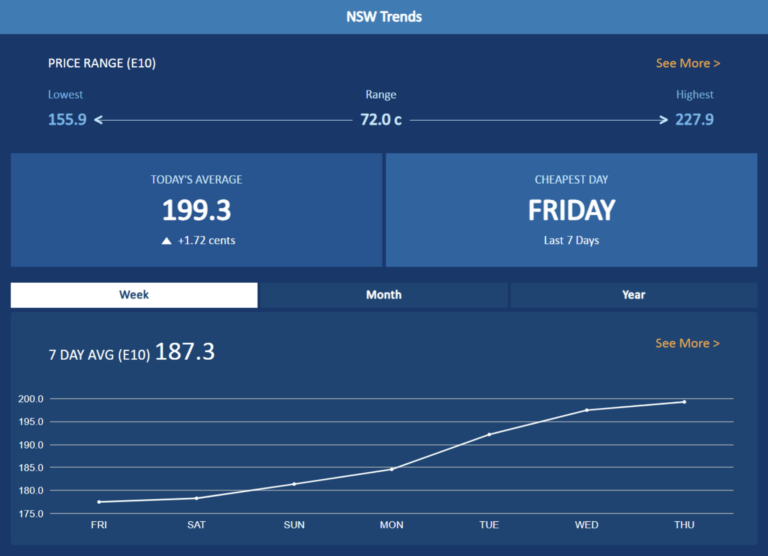
Recent events in the Middle East have caused a sharp spike in global oil prices, pushing the cost of petrol to a new high. According to the NSW Government fuel check, the average price of E10 is now 199.3 cents per litre. That is a jump of 22 cents, or 13%, in just the last week.

If the conflict intensifies, experts warn we haven’t seen the worst of it. Shane Oliver, chief economist at AMP, notes that for every US$1 rise in global oil prices, you can expect to pay an extra 1 cent per litre at the bowser. In a worst-case scenario where oil climbs above US$100 a barrel, petrol could hit $2.20 to $2.40 per litre in major cities. For the average driver travelling 37km a day, fuel at $2.00 per litre already costs around $50 per week or $2600 annually. Any further escalation will put more pressure on household budgets. So, what is the alternative to rising petrol prices?

The alternative is electric

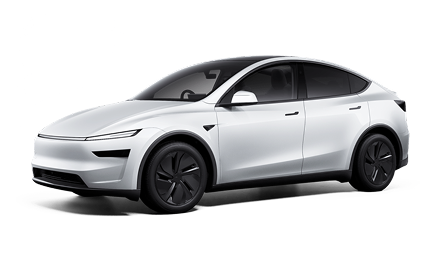
For most drivers, charging an electric vehicle (EV) is cheaper than filling up with petrol. Based on the average travel distance of 37km/day in a Tesla Model Y, the weekly cost to charge can range from free to $20. This depends on where and when you charge.

Latest Deals on novated leases

If you charge at home on a competitive EV electricity plan, costs are often much lower than petrol. If you have solar, charging during the day using excess solar can even be free in some cases. 

Charging options

Cost ($) per kWh
Weekly cost
Annual cost
Annual savings vs. petrol*

☀️ Solar

Charge using your rooftop solar.

$0.00

Free

Free

$2,600.00

⚡ Flat-rate electricity plan

Home charging at your regular electricity rate.

$0.33

$9.58

$498.16

$2,101.84

🔌 EV off-peak plan

Special plan with cheaper off-peak charging.

$0.08

$2.32

$120.77

$2,479.23

⚡ Fast public chargers

Using public chargers if home charging is not available.

$0.70

$20.32

$1,056.70

$1,543.30

*Comparison with an equivalent petrol car assumes petrol at $2.0/litre and fuel consumption of 9L/100km

Stats show that around 80% of EV charging in Australia occurs at home,  so as an average driver in Australia, could save up to $2600 per annum compared to an equivalent petrol car based on the options outlined in the above table. It should be noted that both a solar system and eligibility for EV charging plans require a smart meter to be in place. 

In addition to lower fuel costs, further savings can be realised through salary packing an EV through a novated lease. You can estimate potential savings using Flare’s novated leasing calculator.

Calculate your savings

Information provided is general in nature. We have not taken into account your personal circumstances or financial objectives. Your actual savings are dependent on your personal circumstances, and tax exemptions are subject to eligibility. We recommend seeking independent legal, financial or other professional advice before making any decisions related to this information. 

Recent events in the Middle East have caused a sharp spike in global oil prices, pushing the cost of petrol to a new high. According to the NSW Government fuel check, the average price of E10 is now 199.3 cents per litre. That is a jump of 22 cents, or 13%, in just the last week.