Login

State of EVs in Australia in 2026: Prices, Models, Charging and Trends

Author: Danny Thai   |   21 Apr 2026

Electric vehicles are growing quickly in Australia, with more people making the switch each year as prices fall and more models become available. Global events since the start of the year have further accelerated interest in EVs, adding momentum to an already rapidly growing market.

So where does the EV market stand in Australia in 2026?

 
This article provides a comprehensive overview of the EV market in 2026, covering sales trends, pricing, popular makes and models, government incentives, and charging infrastructure. It will be updated throughout the year as new data and trends emerge.

EV sales and market share in Australia

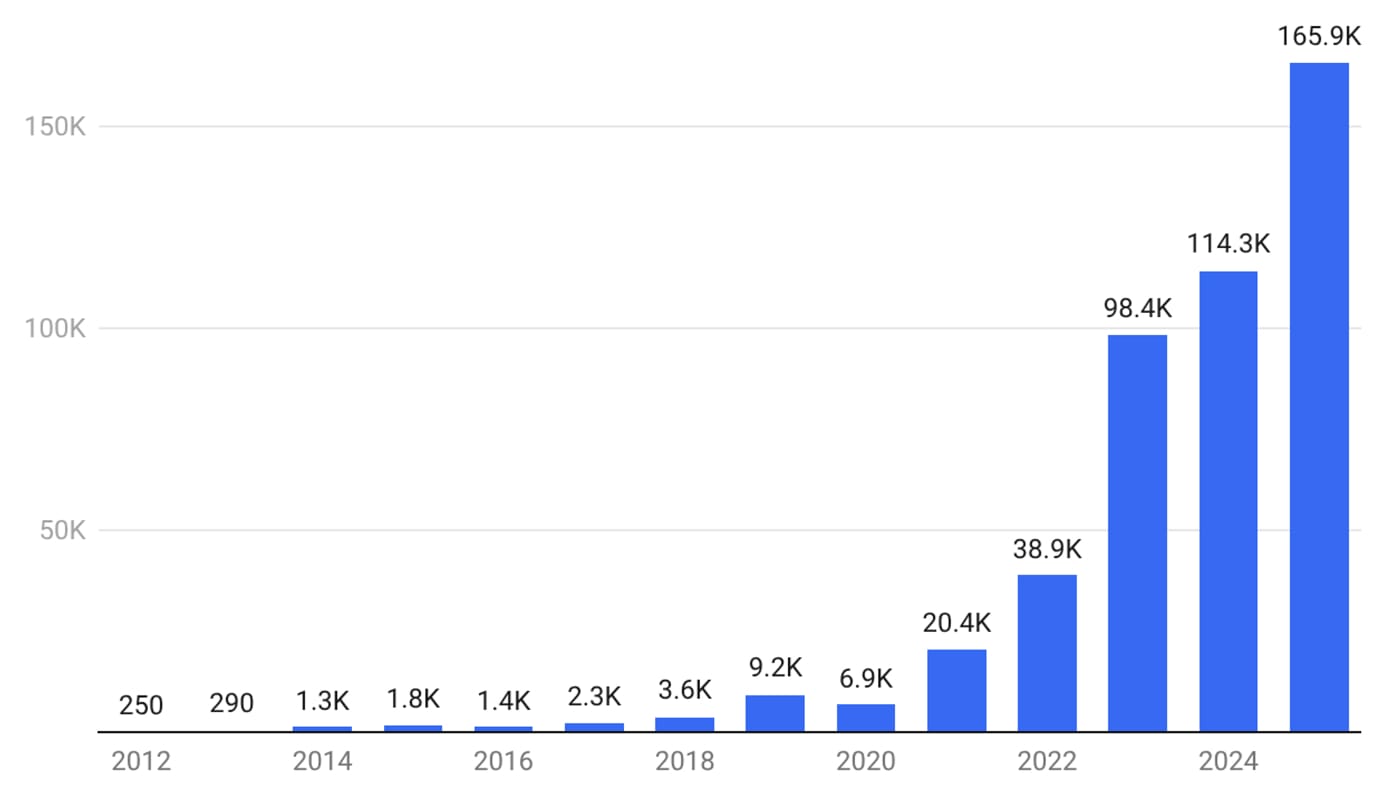
As of February 2026, there are about 500,000 EVs on Australian roads, which is a substantial increase from around 27,000 in 2021. This represents an 18 fold increase over five years and shows how quickly EV adoption has accelerated.

EV sales in Australia 2012-2025

Figures relate to fully electric vehicles sales only, does not include plug-in hybrid vehicle sales.
Source: FCAI

2026 is already shaping up to be a record year for EV sales, with higher fuel prices likely to push more buyers toward electric vehicles as a lower cost alternative over time.

EVs now make up about 12 percent of new car sales, and this share is expected to continue rising as prices come down, more models enter the market, and Australians become more familiar with EV technology and charging.

The competitive landscape has also shifted significantly in recent years.
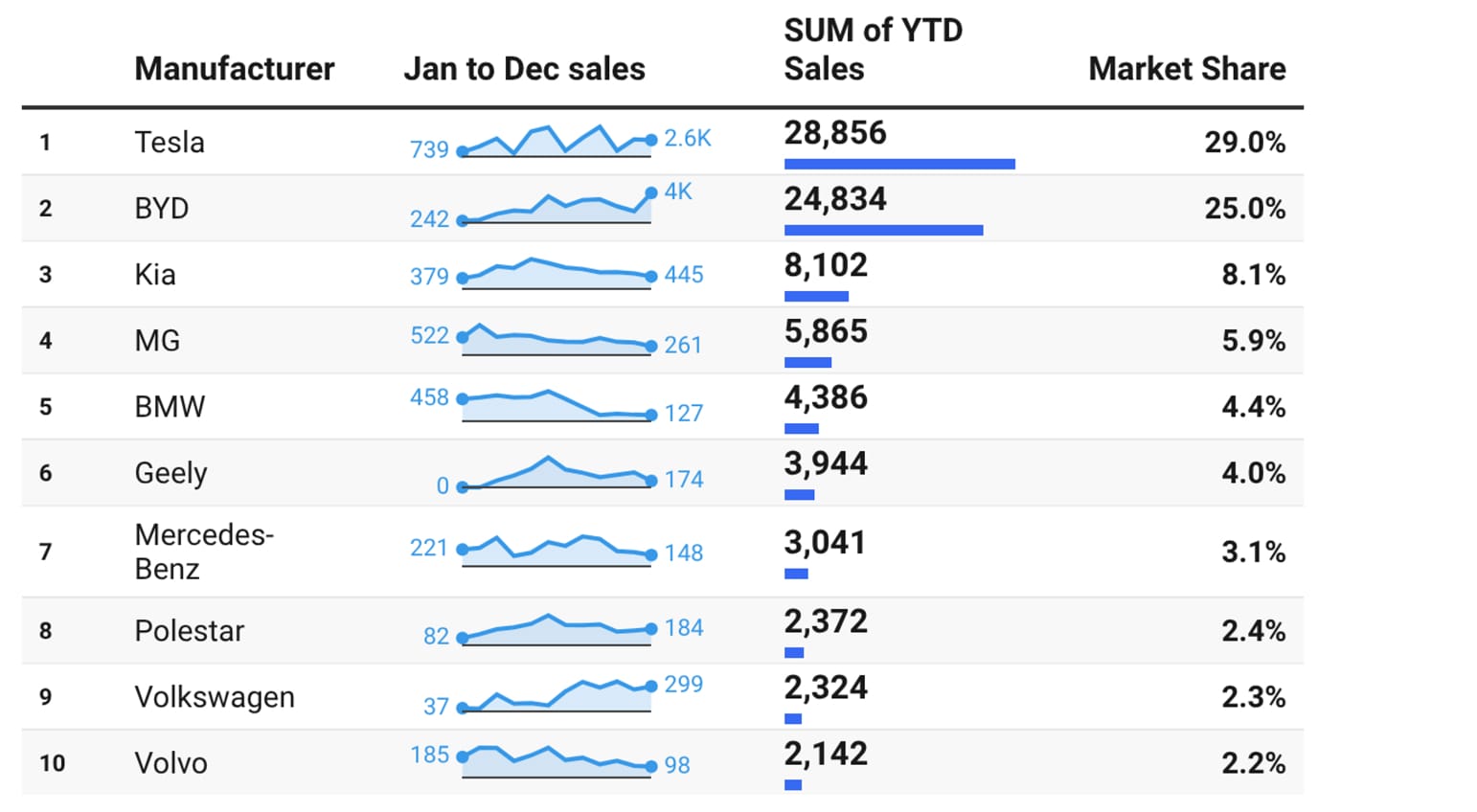
In 2022, Tesla held about 70 percent of the EV market, making it the clear dominant player. Today, its share has dropped to around 29 percent as more brands have entered the market and expanded their offerings.

BYD has emerged as the main challenger, holding about 25 percent market share, and when plug in hybrid sales are included, BYD sells more vehicles than Tesla in Australia.

Top selling EV Brands in Australia (2025)

Source: EVC, FCAI

More than a dozen new brands have entered the market over the past two years, many of them from China, and this trend is expected to continue as new models are released more frequently and existing models are updated at a faster pace.

EV Models available in Australia

There are now around 110 EV models available for sale in Australia, giving buyers more choice than ever before across a wide range of price points and vehicle types.

While there is still a strong concentration in SUVs, particularly in the medium SUV segment, the market now includes options across many body styles such as small cars, sedans, utes, and vans.

Body shape

No. Available

Coupe

2

Hatchback

9

People Mover

4

Sedan

13

Sports Car

3

SUV

70

UTE

1

Van

7

Source: FCAI, EVC

2026 is shaping up to be an important year for new EV launches, with several popular models already confirmed or released.

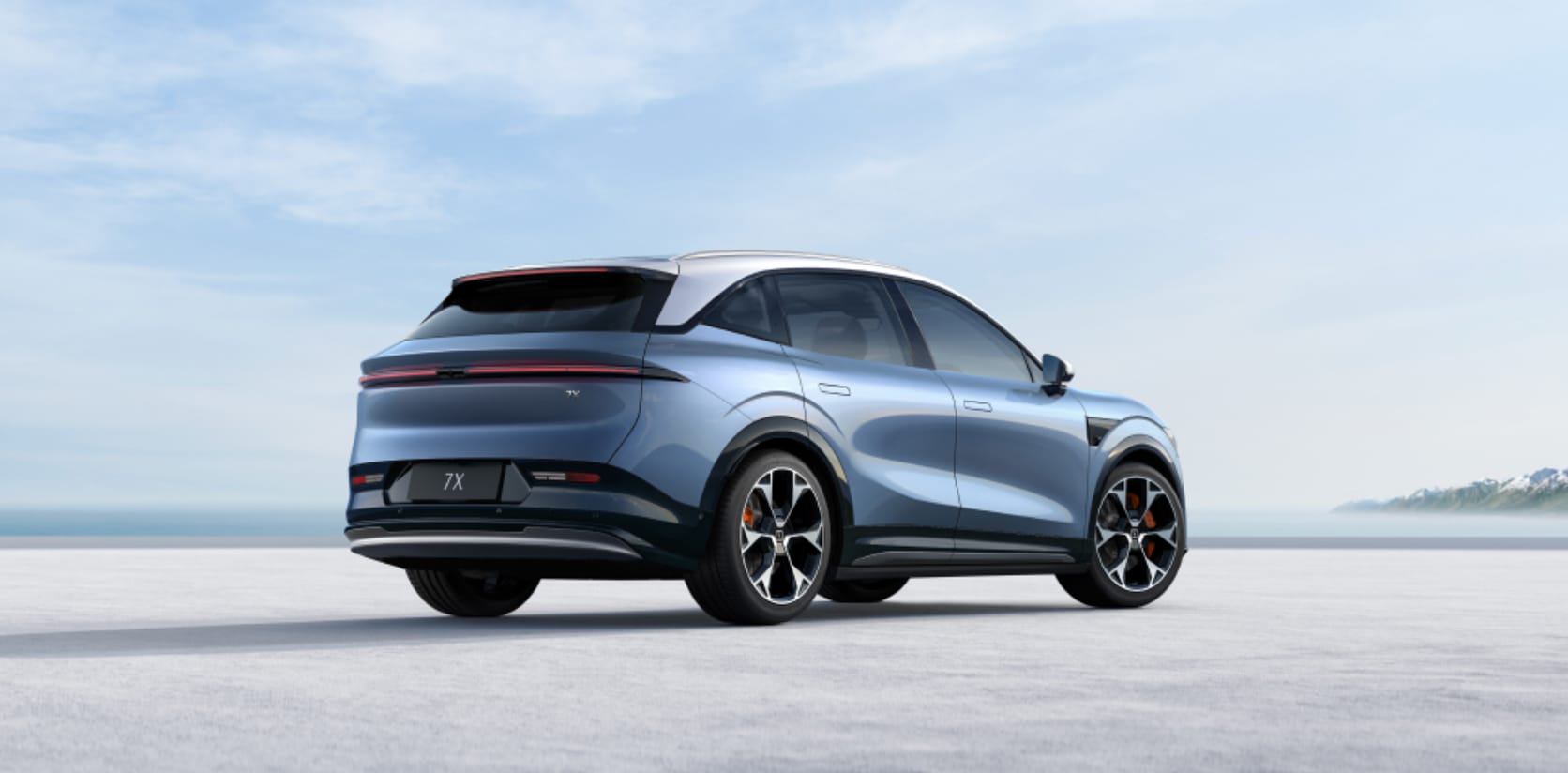
Some key notable model launches include the Tesla Model Y L, the Mazda 6e, new models from Geely, and Zeekr 7X.

Traditional car makers are also increasing their EV efforts as they respond to tighter emissions requirements, with brands such as Mazda, Subaru, and Toyota all planning to expand their EV lineups.

EV pricing and affordability

EV pricing has improved noticeably in recent years, making electric vehicles more accessible to a broader range of buyers.

The average EV price is now about $63,564, compared to around $80,000 in 2021, reflecting steady declines driven by lower battery costs and increased competition.


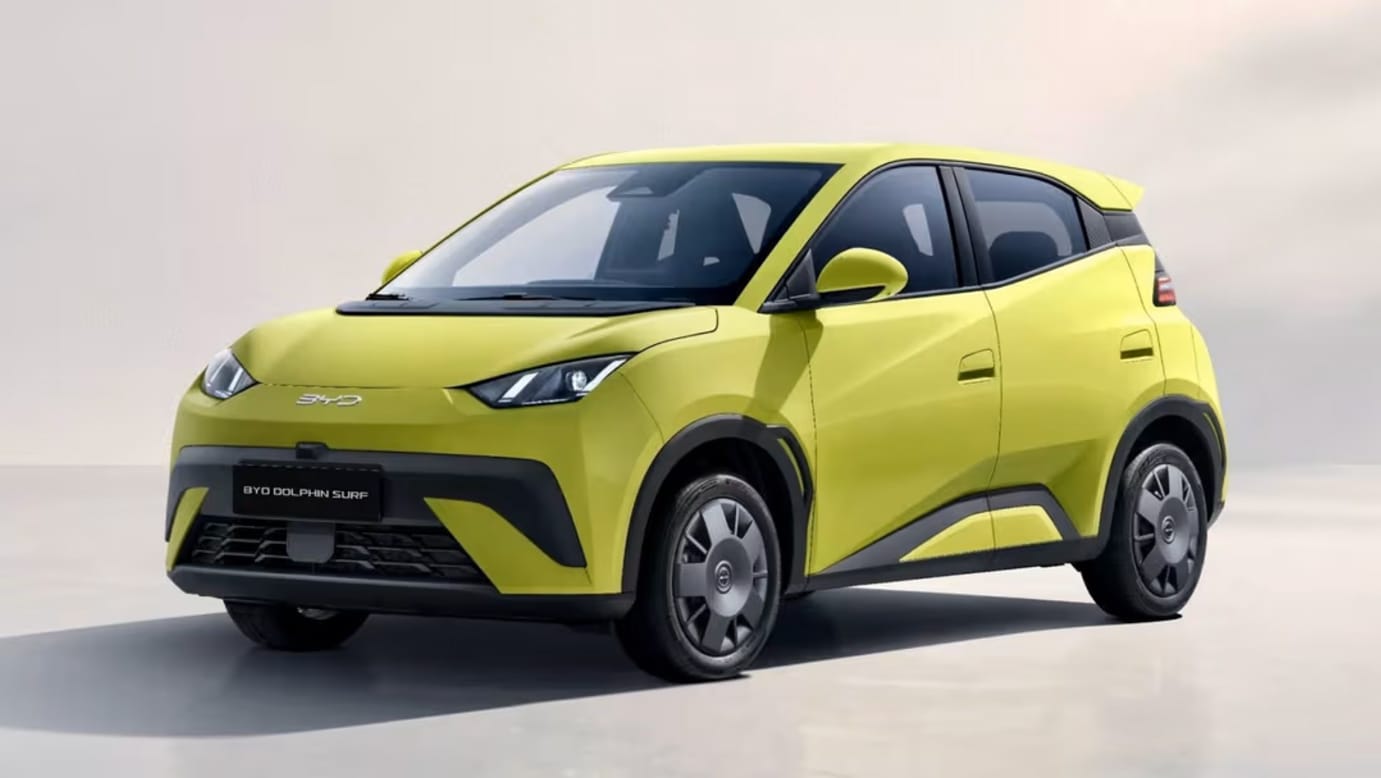
There are currently 12 EV models priced under $40,000, and Australia has now seen its first EV priced below $25,000 (BYD Atto 1), which marks a key milestone for affordability in the market.

These price reductions have been supported by a mix of lower manufacturing costs, more Chinese brands entering the market, and stronger competition across most segments.

While EVs are still on average more expensive than petrol vehicles, in most segments, there are several EV models that have reached price parity, making the upfront cost less of a barrier than it once was. The EV price premium will continue to reduce and with EVs expected to reach average price parity with petrol vehicles in the next 24 months.

Average car prices across fuel types

Fuel type

Average price

Petrol

$ 53,127

Diesel

$ 68,397

Hybrid

$ 50,987

Mild Hybrid

$ 94,541

PHEV

$ 72,152

BEV

$ 63,564

Source: BDO

When looking beyond the purchase price, EVs often have a lower total cost of ownership over time due to lower fuel and maintenance costs.

These savings can be even greater when the vehicle is financed through a novated lease, where the Fringe Benefits Tax exemption can significantly reduce the overall cost.

Calculate your savings

Government EV incentives

Government policy continues to play an important role in supporting EV adoption across Australia, although the level of support varies by state and program.

The main incentives currently include the Fringe Benefits Tax exemption for eligible EVs. State based incentives have largely fallen away with only the ACT and Northern Territory providing registration and stamp duty concessions.

Charging options

Cost ($) per kWh
Annual cost*

⚡ Flat-rate electricity plan

$0.35

$741.12

⚡ EV off-peak plan

$0.08

$169.40

⚡ Fast public chargers

$0.70

$1,404.23

*Based on 13,000 km per year

A key development is the New Vehicle Efficiency Standard, which is designed to reduce emissions across the vehicle fleet and encourage manufacturers to supply more low emission vehicles.

This policy is already having an impact by increasing the number of EV models available in Australia and putting pressure on car makers to price them more competitively.

Source: energy.vic.gov.au

EV charging infrastructure in Australia

Charging remains one of the most discussed topics when it comes to EV adoption, both in terms of real limitations and perceived concerns among buyers.

With 70% of Australians living in standalone houses, home charging is the primary option, as any standard power point can usually be used to charge an EV, making it the most convenient and lowest cost option for daily use.

Charging in apartment buildings is a more challenging situation due to a myriad of reasons including: electrical infrastructure, administrative hurdles and split incentives problem. To date most apartment dwellers are largely reliant on public charging to meet their day-to-day charging needs. 

New solutions however are emerging to support apartment residents and shared buildings, making it easier for more Australians to access charging where they live, such as the largest EV enabled apartment building in Australia.

Public charging still plays an important role, particularly for drivers who do not have access to off street parking and for those travelling longer distances.

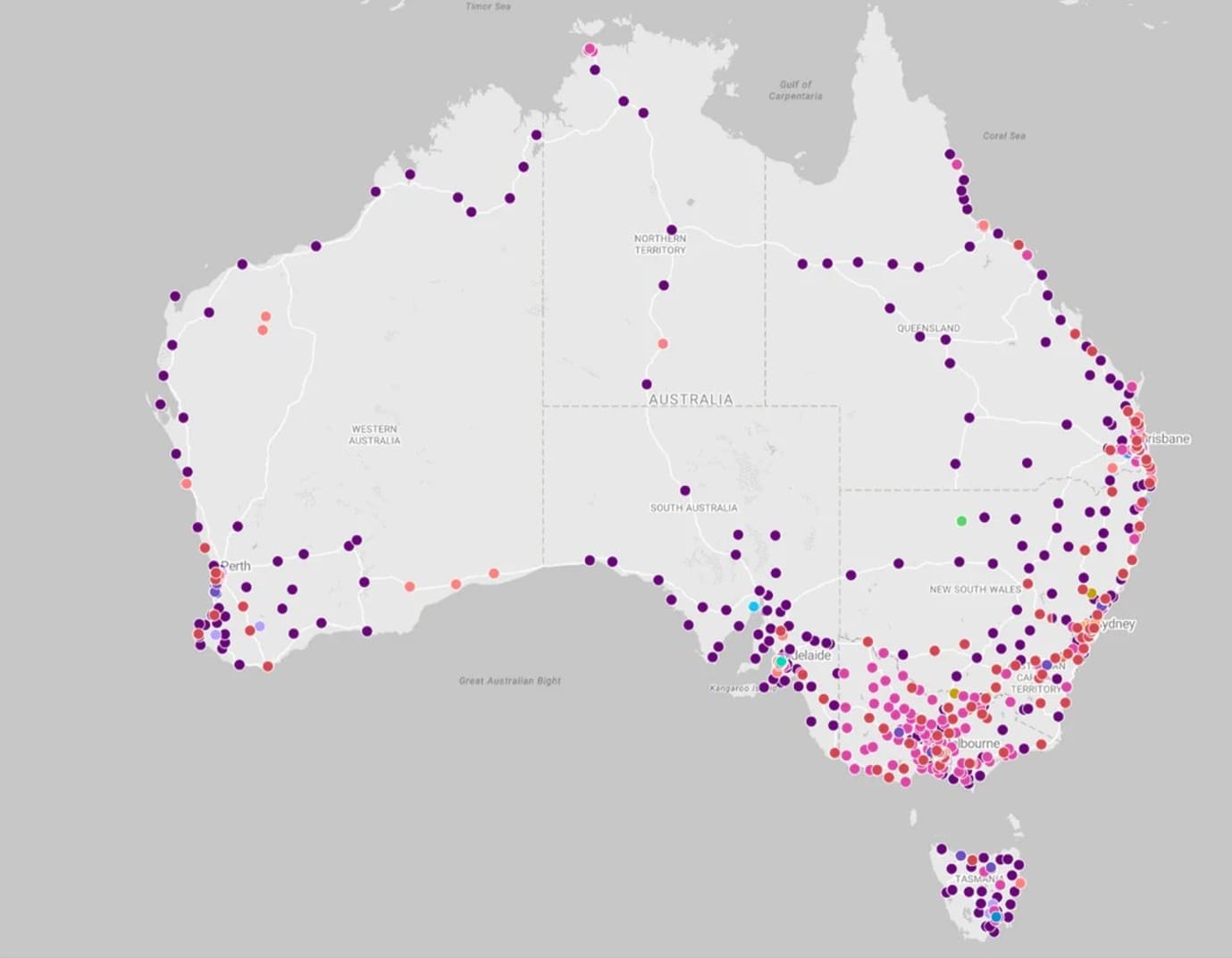
Australia’s public charging network continues to grow and now includes:

  • 5,133 charging sites
  • 1,554 DC fast charging sites
  • 3,579 AC charging sites

Major networks include Tesla, Chargefox and Evie Networks, both of which are expanding coverage across key routes and urban areas.

A map of Australia showcasing the current fast charger network – as of 2025.

EV technology trends

EV technology continues to improve at a rapid pace, particularly in areas such as battery performance, charging speed, and overall efficiency.

Batteries are becoming cheaper to produce while also offering higher energy density, improved safety, and faster charging times compared to earlier generations.

BYD has introduced its new generation Blade 2.0 battery, which under ideal conditions can charge from 10 percent to 80 percent in around five minutes, which is comparable to refuelling at a petrol station.

The technology is currently being rolled out in China, with Australia on the roadmap to potentially receive both the EV models and charging infrastructure required to support this ultra rapid charging. 

While the technology provides a compelling experience for EV drivers, it will be a while before these ultra rapid charging stations are as prevalent as petrol stations. 

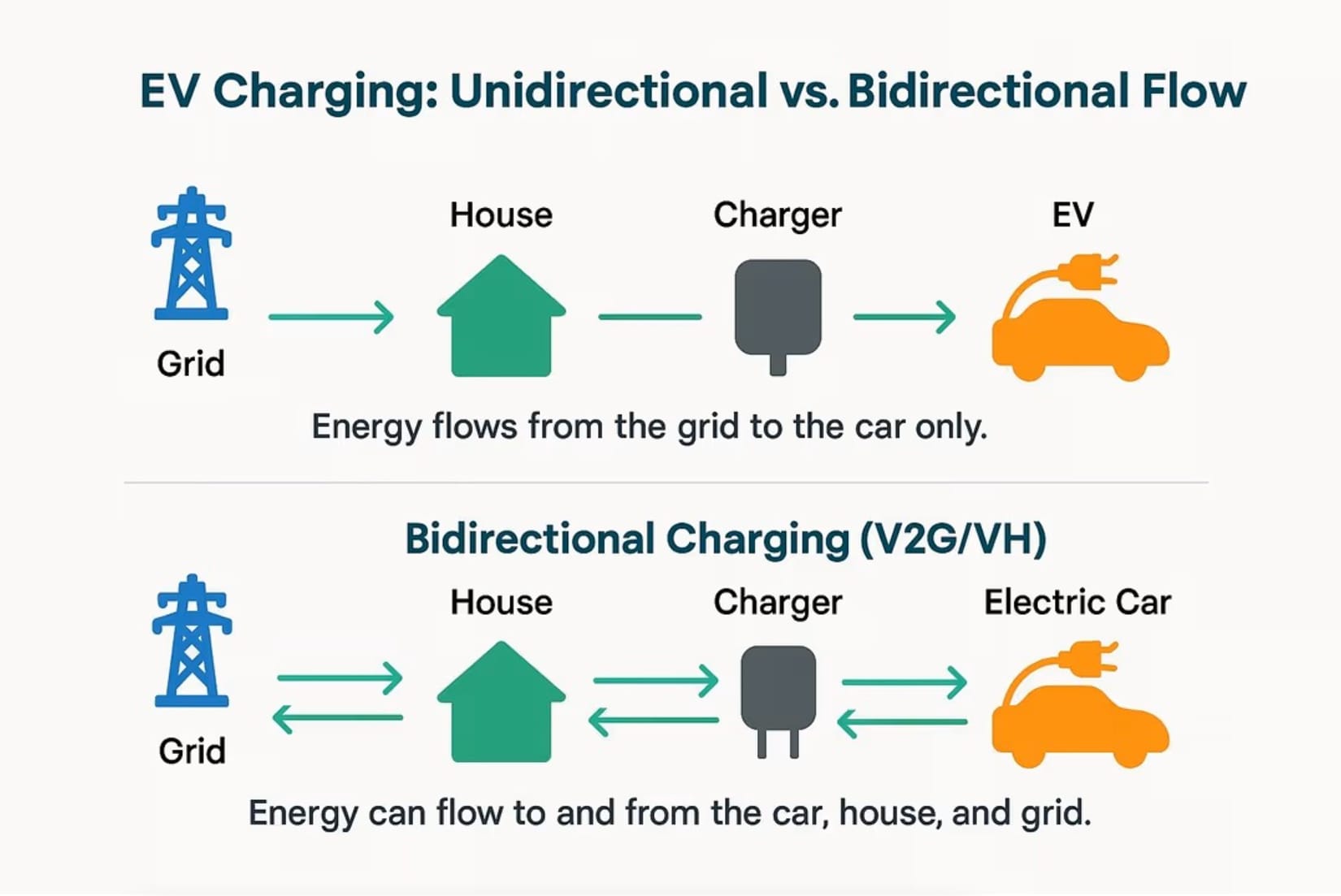
Another important development is Vehicle-to-grid (V2G), which allows an EV to supply power back to a home or the grid. Similar to home batteries, this technology allows you to use your EV battery to supply power to your home or the grid, potentially saving you thousands per year off your energy bill. 

While the technology is already available in some vehicles, widespread adoption has been limited by a lack of formal approval and support from manufacturers.

Over the next 12 months, more brands are expected to enable and support V2G, allowing EV owners to use their vehicle as part of their home energy system.

Top selling EV Brands in Australia (2025)

Source: zecar

Outlook for 2026

The rest of 2026 is expected to bring continued growth in EV adoption, supported by a wider range of models, lower prices, and ongoing improvements in charging infrastructure. The conflict in the middle east has amplified this interest as customers search for cost effective alternatives to petrol vehicles.

While some challenges remain, particularly around public charging access and infrastructure rollout, the overall direction of the market is clear, with EVs becoming an increasingly common choice for Australian car buyers.

FAQ's

There are about 500,000 EVs on Australian roads as of early 2026, reflecting rapid growth over the past few years.

EVs currently make up around 12 percent of new car sales, and this share is expected to increase further.

Yes, average EV prices have fallen from around $80,000 in 2021 to about $63,564 today as costs decline and competition increases.

There are now more than 5,000 public charging sites across Australia, including both AC and DC charging options.

Yes, most Australians can charge an EV at home using either a standard power point or a dedicated home charger.

Electric vehicles are growing quickly in Australia, with more people making the switch each year as prices fall and more models become available. Global events since the start of the year have further accelerated interest in EVs, adding momentum to an already rapidly growing market.